Locale Woodfire Catering · Event planning guide
A starting estimate for meat quantities, with practical adjustments for the menu, service style and guests.
How much meat per person for catering? If meat is the main part of a meal, a starting estimate for boneless raw meat is around 200–250 g per adult. That is a planning range, not a fixed serving rule. A light grazing table, a pizza party with cured meats as one topping, and a plated roast dinner need very different quantities. Decide what guests will actually be offered before multiplying a number by your headcount.
An Australian butcher’s meat-planning guide gives 200–250 g of raw boneless meat per adult when it is the main dish. Use the range only for that situation. Check whether your order is raw or cooked, boneless or bone-in, and whether sides and other mains are included. If a professional caterer is preparing the food, ask for their package’s serving plan rather than ordering meat separately from a generic chart.
A quick calculation for a meat-centred meal
For 40 adults, 200 g of raw boneless meat each comes to 8 kg; 250 g each comes to 10 kg. That gives you an initial range of 8–10 kg for a meal where meat is the main component. It is not an instruction to order 10 kg for every 40-person event. Children, dietary choices, the number of sides and the style of service can change the plan substantially.
Write down your assumptions when using this calculation: “40 adults, meat main, raw boneless weight, sides also served.” Then ask the caterer or butcher whether the selected cut, preparation and event schedule call for an adjustment. A quoted package may already include all ingredients; adding a separate allowance could lead to unnecessary food and cost.
Why raw and cooked weights differ
Cooking changes the weight of meat, while bones and trim reduce the edible portion. A quote for 200 g of raw boneless meat is different from 200 g of cooked sliced meat. The amount lost depends on the cut and cooking method. Do not mix these units in one calculation. If a provider states a cooked portion, ask whether it is the served amount. If you are buying a bone-in cut, ask the butcher what quantity is appropriate for the number of guests.
Mixed menus need even more care. If guests can choose between meat, vegetarian pizza and other dishes, not everyone will take a full meat portion. Counting the entire guest list at the meat-main rate will overstate demand. Work from actual menu choices and dietary responses rather than an assumed average appetite.
Adjust for the style of catering
Plated main course
A plated menu gives the caterer the clearest portion count. Confirm how many guests selected each main and whether children have a different option. The food service team should size the meal as a whole, including vegetables and sides, rather than using one meat figure in isolation.
Buffet or barbecue
Self-service makes individual choices less predictable. List every protein and substantial side, then ask the caterer how they replenish food and manage the service window. If several meats are available, a guest is unlikely to need a full main-course allocation of each one. Bone-in pieces also need different purchasing weights from boneless cuts.
Grazing or starters
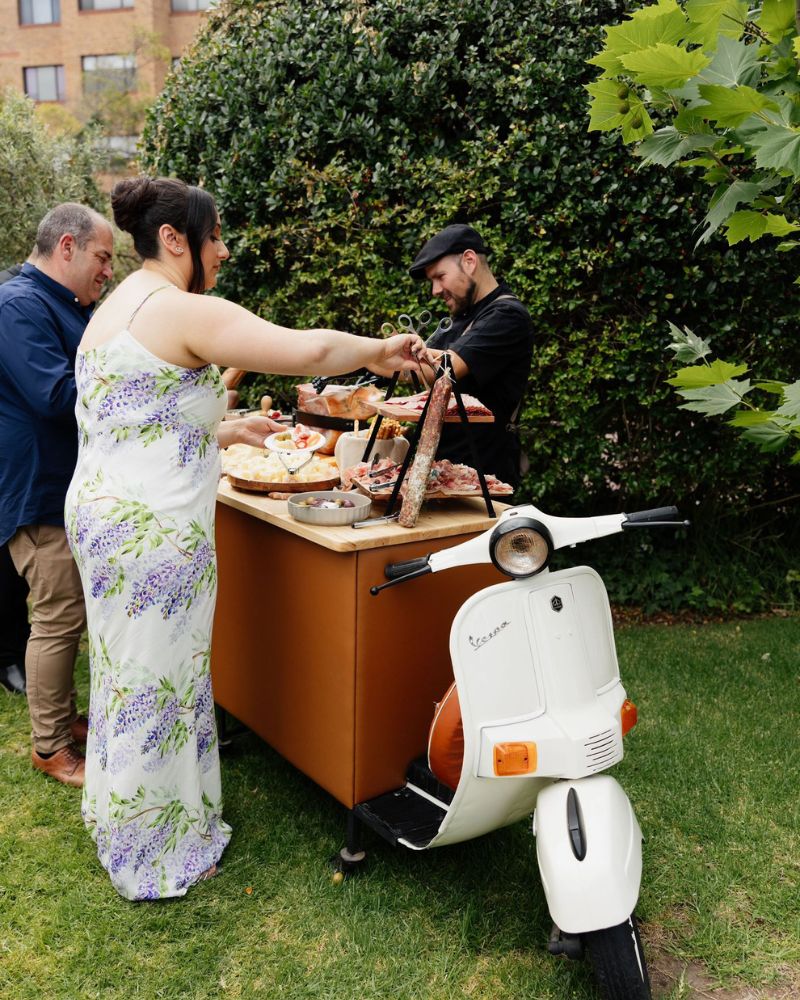
Charcuterie and other starters are usually one part of a wider menu. Their amount depends on whether they replace a meal or precede pizza, dessert and other food. A salumi bar alongside wood-fired pizza should be planned as an add-on, not as if cured meat were the only main course. Ask the supplier what is included per guest and for how long the station will be available.
Count the people who will eat
Start with confirmed adults, then list children and event suppliers separately. Record vegetarian and vegan guests so you do not assign them a meat portion, and tell the provider about allergies or other dietary requirements. Your headcount may change after invitations go out. Ask when the final number is due, what changes can be made after that date and whether the quote has a minimum number of guests.
For example, a 50-person event might include 38 adults choosing meat, 6 guests choosing a vegetarian meal and 6 children. The relevant meat count is not automatically 50. The children’s choices and the caterer’s menu still need to be confirmed. Use the RSVP information you have, rather than rounding all attendees into the same serving category.
What if pizza is the main meal?
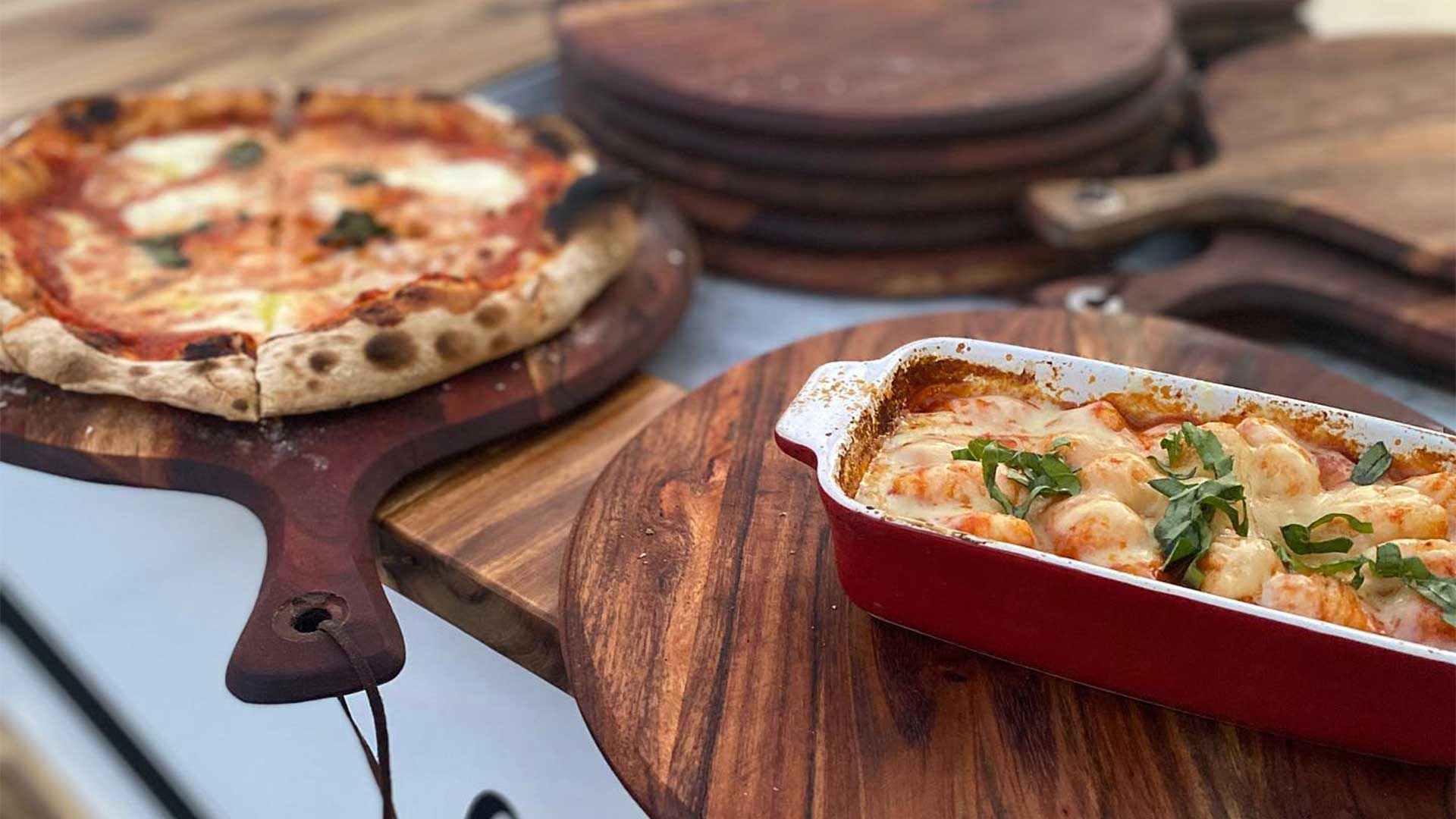
A raw-meat-per-person chart is the wrong tool for estimating wood-fired pizza catering. The menu may use meat toppings, vegetarian pizzas and other food, but guests are served pizza rather than a separate 200 g meat portion. Tell the pizza caterer your guest count, event duration, dietary requirements and preferred menu, then ask how the package is planned for that group.
Locale Woodfire Catering’s published Adelaide catering packages include Feed Me Pizza, Entertain Me and The Locale Experience. The first two list a Salumi Bar as an available add-on; The Locale Experience includes one. The packages have published recommended group sizes, but the suitable choice and food quantities are confirmed through an enquiry. Do not assume that the general raw-meat estimate above describes a Locale package.
Avoid both shortages and waste
Share the menu, guest breakdown and service time with the caterer early. Ask how much notice they need for changes and what happens to food that is not served. If you are organising a long event, tell them whether guests arrive together or in waves. This affects how food should be prepared and replenished. Clear planning is better than adding an unexplained percentage “just in case”.
Food safety also matters when meat is displayed or transported. Food Standards Australia New Zealand explains the 2-hour/4-hour rule for potentially hazardous food taken out of refrigeration. It counts the total time food spends between 5°C and 60°C, including preparation, transport and display. For a catered event, ask the professional provider how food will be kept and served safely; do not use a portion calculation as a substitute for a food-safety plan.
Short answers
How much meat for 100 adults?
For a meat-centred meal with raw boneless meat, the 200–250 g starting range becomes 20–25 kg. Confirm the cut, menu and actual number of meat eaters before buying.
Should I use the same amount for children?
No. Ask your caterer about a children’s menu and provide the children’s ages and choices. Avoid treating every guest as one identical adult portion.
Does this amount include pizza toppings?
No. A pizza caterer plans toppings as part of the pizzas and the overall package; the raw-meat main-course guide is not a topping formula.
Questions to ask before accepting a catering quote
- Is the quoted quantity based on raw or cooked weight, and is the meat boneless?
- Is meat the main meal, one of several mains, or part of a starter?
- How are children, vendors and guests with dietary requirements counted?
- What sides, desserts and service hours are included?
- When is the final guest number required, and how can it change?
- What are the venue setup and safe-serving requirements?
In short: 200–250 g of raw boneless meat per adult can help start a meat-main calculation. The right quantity depends on the menu, the people attending and the way food is served. For pizza catering or a salumi add-on, use the actual package details and a written quote instead of applying a generic meat allowance.